
The Science Behind Safe Shark Diving at Tiger Beach
Separating Myth from Reality
This article explores the science behind safe shark diving. How shark biology, behavior, and environmental factors all contribute to controlled and respectful encounters with these magnificent animals.
Sharks have fascinated, and frightened, people for generations. Movies and headlines often portray them as dangerous predators, but the reality for divers is very different. At Tiger Beach in the Bahamas, divers can safely encounter tiger sharks up close thanks to a deep understanding of shark behavior, proven safety protocols, and decades of scientific research.
Understanding Shark Behavior
At the core of safe shark diving is an appreciation for how sharks behave in their natural environment.
📘 Science Note: Research shows that sharks are more cautious than aggressive around humans. In most cases, they approach slowly, circle, and retreat before deciding whether to come closer.
The Role of Dive Professionals
Professional shark diving operators, like Epic Diving, use strict procedures to maintain safety for both divers and sharks.
By combining science with real-world expertise, operators create conditions where divers can safely observe sharks while respecting their natural behavior.
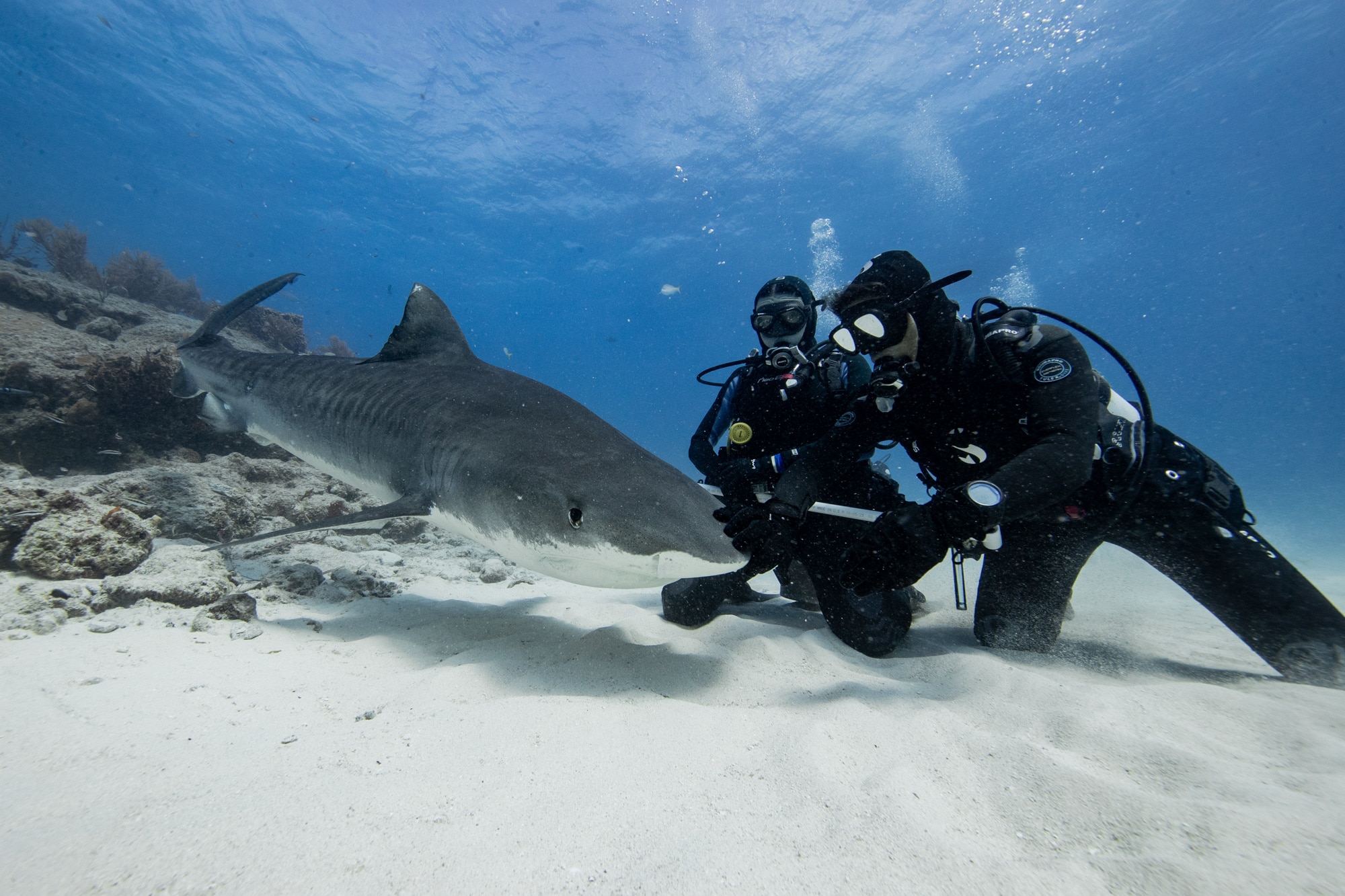
Environmental Factors That Keep Shark Diving Safe
The environment at Tiger Beach is uniquely suited for safe shark diving.
These natural features provide a built-in safety advantage for both divers and sharks.
Shark Biology and Safety Insights
Scientific research on shark biology directly informs safety protocols for diving with them.
📘 Science Note: Studies show that baited shark dives, when managed responsibly, do not make sharks dependent on humans for food but instead create temporary aggregation sites.
Safety Protocols for Divers
Divers also play a key role in maintaining safe shark interactions. Key guidelines include:
These rules, grounded in science and experience, ensure that interactions remain safe and respectful.
Why Shark Diving Is Safer Than You Think
When comparing shark diving to other adventure activities, the risks are remarkably low.
Conclusion
Safe shark diving isn’t about luck. It’s about science, preparation, and respect for the animals. By understanding shark behavior, leveraging their natural environment, and following established safety protocols, divers at Tiger Beach can enjoy unforgettable encounters with one of the ocean’s most iconic species.
At Epic Diving, we take the the science behind safe shark diving very seriously. We combine scientific insight with years of hands-on expertise to ensure every dive is thrilling, safe, and conservation-minded. The result? A chance to experience tiger sharks up close, safely, and responsibly, a life-changing adventure backed by science.
FAQs:
Yes. With experienced guides, clear protocols, and predictable shark behavior, shark diving is far safer than most people imagine.
Sharks do not view humans as prey. Scientific studies show most shark approaches are investigative, not aggressive.
Shallow depths, sandy bottoms, and excellent visibility make it an ideal environment for observing sharks safely.
No. Research shows baited dives create temporary aggregations but do not make sharks dependent on humans for food.
Stay calm, follow guide instructions, maintain positioning, and never touch or chase sharks.


