The State of Shark Science: What We Know and Why It Matters
Sharks have swum the oceans for over 400 million years, but today they face challenges unlike any in their evolutionary history. A recent Pew report, “Sharks: State of the Science,” compiles decades of research to give us a clearer picture of their biology, threats, and the growing urgency for conservation.
Why Sharks Matter
Sharks are more than just awe-inspiring predators. They play a critical role in maintaining ocean balance by regulating prey populations and supporting biodiversity. Healthy shark populations are directly linked to the resilience of marine ecosystems.
What Science Tells Us
The report highlights several key findings:
- Declining Populations
- Many shark species have experienced drastic declines due to overfishing, bycatch, and habitat loss.
- Slow Life Histories
- Sharks grow slowly, mature late, and produce relatively few offspring, making them highly vulnerable to overexploitation.
- Global Connectivity
- Tagging and satellite tracking show sharks often migrate across vast distances and multiple national boundaries, requiring international cooperation for management.
- Bycatch and Targeted Fisheries
- Sharks are often caught unintentionally in tuna and swordfish fisheries, but they’re also directly targeted for meat and fins.
Conservation Advances
Despite the challenges, shark science is informing conservation strategies that are making a difference:
- Marine Protected Areas (MPAs)
- Research shows MPAs can be effective in rebuilding shark populations, especially when they cover key nursery or aggregation sites.
- International Agreements
- Treaties like CITES and CMS are beginning to include more shark species, helping regulate global trade.
- Technological Innovation
- New tagging, genetic tools, and fisheries monitoring technologies are giving scientists and managers better insights into shark movements and population health.
Why This Matters for Divers
For divers, these scientific insights bring added depth to every underwater encounter. When you see a shark in the wild, you’re not just meeting an apex predator. You’re witnessing a keystone species whose survival is tied to the health of entire ecosystems.
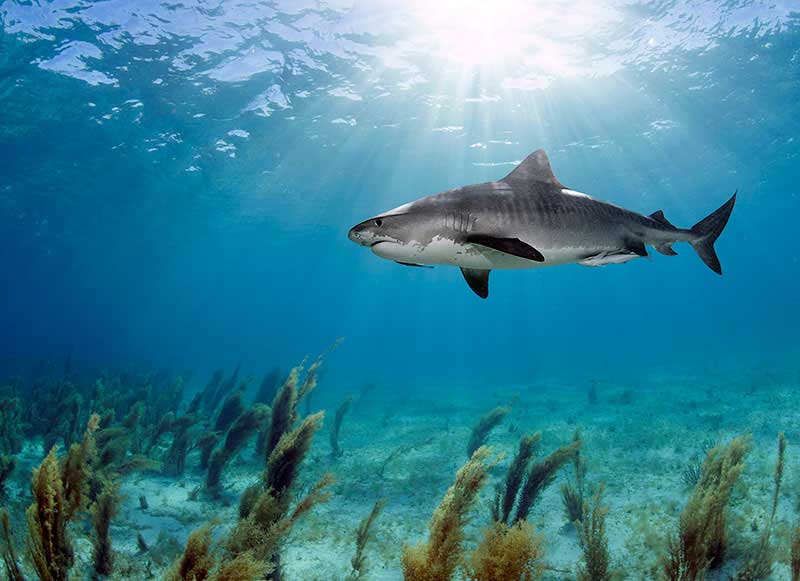
At places like Tiger Beach in The Bahamas, research has shown how shark hotspots serve both as ecological treasures and windows into global shark conservation. Science transforms the dive from a thrilling adventure into an opportunity to understand and protect the oceans.
The Path Forward
The state of shark science makes one thing clear: protecting sharks is not optional, it’s essential. Continued research, stronger protections, and global cooperation are needed to ensure that sharks remain an enduring part of our oceans for generations to come.
We’re proud to operate in The Bahamas, home to some of the strongest shark protections in the world. Join us at Tiger Beach to see firsthand the species at the heart of cutting-edge science and global conservation.
Join Us!