
Health & Safety for Divers: Insurance, Gear, and Fitness Preparation
Introduction
When planning a dive trip, whether it’s your first adventure or your fiftieth, safety should always come first. While the thrill of exploring coral reefs, wrecks, or shark encounters at Tiger Beach is unforgettable, it’s important to make sure you’re prepared, protected, and physically ready for the experience.
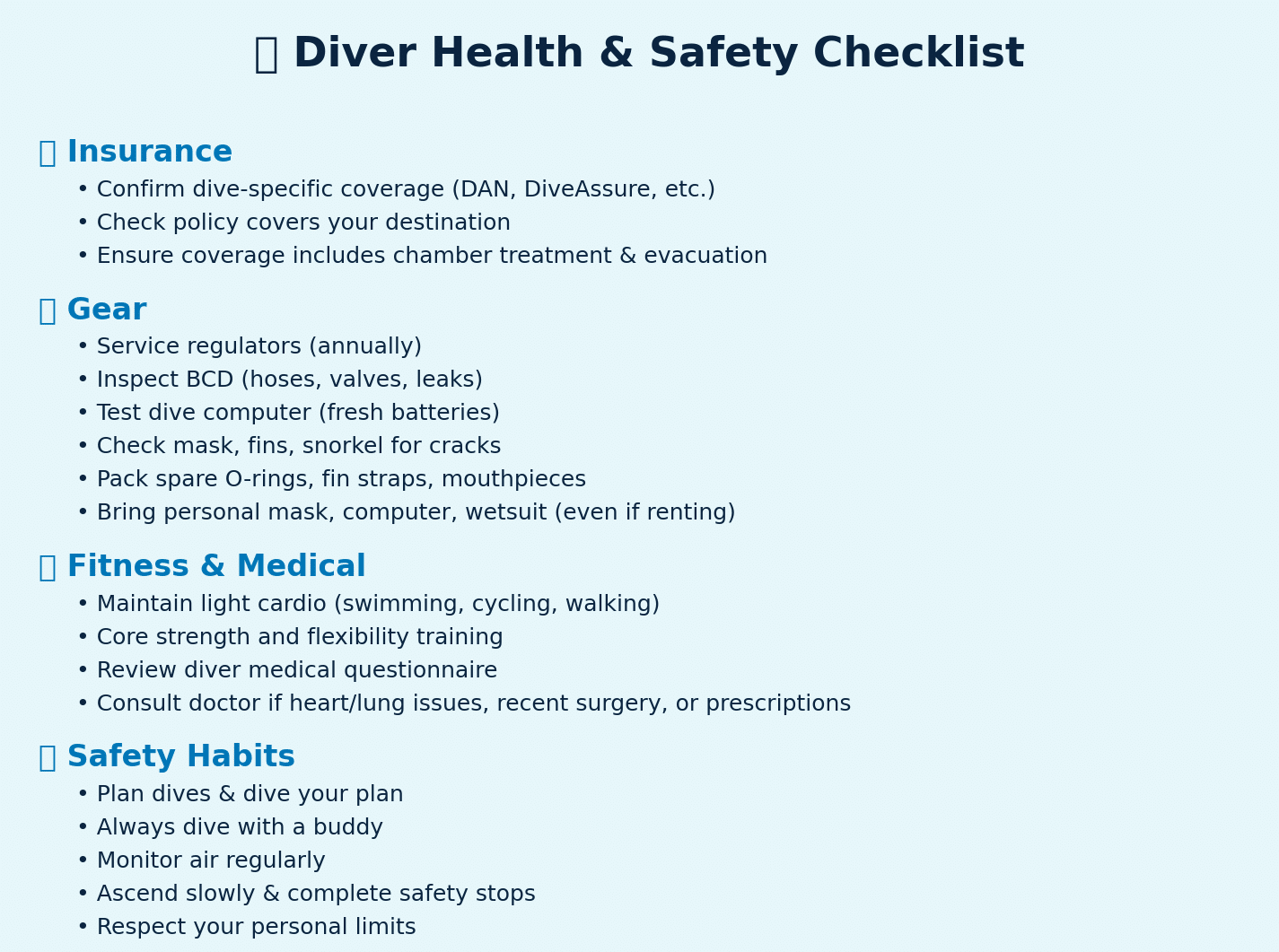
This guide breaks down three essential elements of dive health and safety: having the right insurance, checking your gear, and preparing your body for the demands of diving.
Dive Insurance: Why It Matters
Scuba diving is generally very safe, but like any adventure sport, accidents can happen. Dive insurance provides peace of mind by covering unexpected costs if something goes wrong.
What Dive Insurance Covers
Popular Dive Insurance Providers
Many divers choose organizations that specialize in dive coverage, such as Divers Alert Network (DAN) or DiveAssure. These companies understand the unique risks of diving and provide plans tailored specifically for divers.
✅ Tip: Always confirm that your policy covers the region you’re diving in and includes activities like liveaboard diving or shark encounters if they’re on your itinerary.

Gear Preparation: Your Lifeline Underwater
Your dive gear is more than equipment. It’s your life support system. Ensuring it’s in top condition is one of the most important safety steps you can take.
Pre-Trip Checklist
Renting vs. Bringing Your Own Gear
✅ Tip: Even if you rent, consider bringing personal items like your mask, dive computer, and wetsuit for best fit and reliability.
Fitness Preparation: Diving is a Sport
Scuba diving may not feel like running a marathon, but it does put demands on your body, especially when carrying gear, swimming against currents, or making multiple dives per day.
Key Fitness Considerations
Medical Fitness to Dive
Before your trip, check in with your doctor if you:
We require completion of a diver registration form, be honest and let us know if you have any medical conditions or are taking any medications that could impact your diving, as it’s about your safety.
✅ Tip: Even light regular exercise (swimming, cycling, yoga) can make a noticeable difference in dive performance.
Practical Safety Habits Every Diver Should Follow
Beyond insurance, gear, and fitness, here are universal safety practices for every trip:
These small habits go a long way in preventing problems before they happen.
FAQs About Dive Health and Safety
Yes. Standard travel insurance often excludes scuba diving. Dive-specific policies cover treatment and evacuation if needed.
A well fitting mask and dive computer are worth owning, even if you rent the rest. Comfort and accurate dive data are critical.
You don’t need to be an athlete, but general cardiovascular fitness and good overall health make diving safer and more enjoyable.
Conclusion
Scuba diving opens the door to incredible underwater adventures, but preparation is key. With dive insurance, well-maintained gear, and basic fitness prep, you’ll set yourself up for safe and stress-free diving.
Whether exploring coral reefs or diving with sharks at Tiger Beach, these health and safety practices ensure your focus stays on the adventure, not potential problems.


