
Shark Social Behavior: Do Sharks Hunt in Groups?
Introduction
Sharks are often thought of as lone hunters, silently patrolling the seas in solitude. But recent research shows the reality is more complex. Some shark species display social behavior, forming groups, aggregating in key areas, and in rare cases, even coordinating their hunting strategies.
For divers, understanding shark social behavior not only reveals the intelligence of these animals but also offers clues about where and when sharks are most likely to gather.
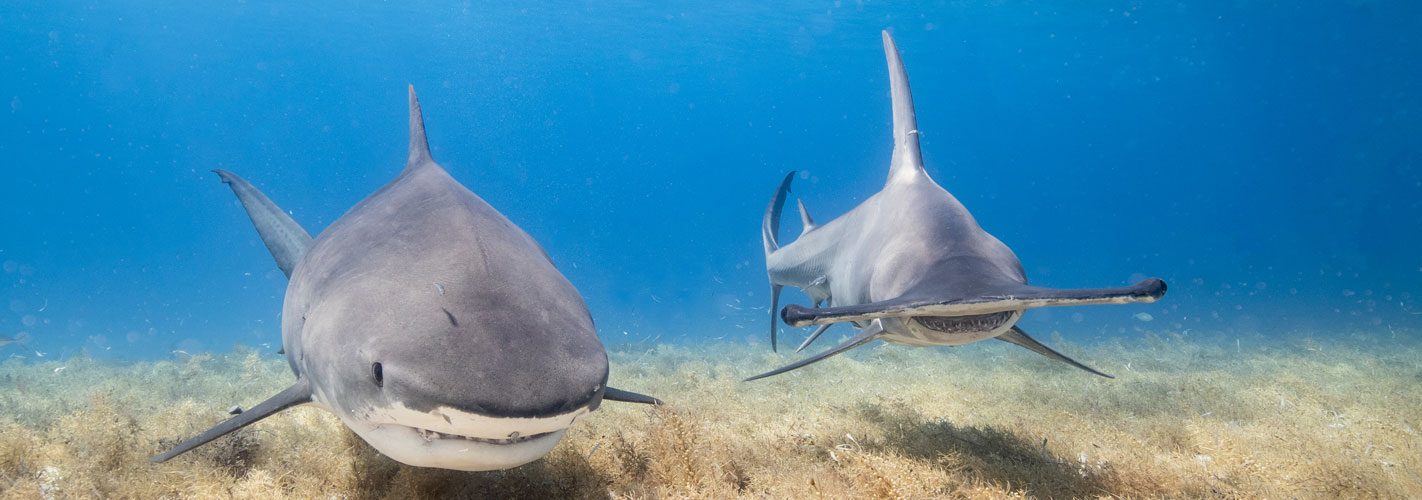
The Myth of the Lone Predator
For decades, sharks were portrayed as solitary, instinct-driven predators. Unlike dolphins or whales, they weren’t believed to form strong social bonds. This assumption shaped how both scientists and the public viewed them.
But long-term studies, acoustic tagging, and direct observation have started to challenge that narrative. While many species are solitary most of the time, others show surprising levels of interaction.
Sharks That Form Groups
Not all sharks are social, but some species regularly gather together for reasons ranging from feeding to reproduction.
- Silky Sharks: Known for forming large schools in pelagic waters, sometimes numbering in the hundreds.
- Scalloped Hammerheads: Famous for their massive daytime aggregations near seamounts and reefs.
- Grey Reef Sharks: Observed forming loose social hierarchies within groups on Pacific reefs.
- Whale Sharks: Congregate seasonally in feeding hotspots like Mexico and the Philippines.
These gatherings may help with protection, foraging efficiency, or reproductive opportunities.
Do Sharks Hunt in Groups?
Unlike wolves or dolphins, sharks don’t typically engage in tightly coordinated group hunts. However, evidence suggests some species use opportunistic or loosely cooperative feeding strategies:
- Blacktip Sharks: Have been seen working in loose groups to herd schools of fish.
- Whitetip Reef Sharks: Sometimes hunt cooperatively at night, flushing prey from reef crevices.
- Tiger Sharks: While usually solitary, may feed side by side during turtle nesting season, with minimal aggression.
This suggests sharks can adapt their behavior when food is abundant, though true cooperative hunting (like a pack strategy) remains rare.
Social Hierarchies and Interactions
Studies using tagging and tracking have shown that some sharks develop social preferences, spending more time with specific individuals. For example:
- Grey reef sharks have been observed forming structured social networks.
- Nurse sharks gather in predictable mating aggregations each year.
These findings challenge the idea that sharks are purely instinctual animals, highlighting their behavioral flexibility and adaptability.
Implications for Divers and Conservation
Understanding shark social behavior matters for two reasons:
- For Divers
- Aggregations often lead to spectacular encounters, such as hammerhead schools.
- Awareness of shark group behavior helps divers know when to expect higher activity.
- Observing sharks in groups emphasizes their complexity and intelligence.
- For Conservation
- Protecting aggregation sites is critical for species survival.
- Disturbing social groups can disrupt mating or feeding behaviors.
- Group behavior means some species are especially vulnerable to targeted fishing.
FAQs About Shark Social Behavior
Are sharks social animals?
Some species are. While many sharks live solitary lives, species like hammerheads, silkies, and whale sharks often form large aggregations.
Do sharks ever hunt together?
Yes, but loosely. Some reef sharks have been observed herding prey, and whitetip reef sharks show cooperative hunting at night.
Why do sharks form groups if they’re predators?
Groups may help them conserve energy, find food more efficiently, or increase chances of reproduction.
Conclusion
Sharks are far more socially complex than once believed. While many remain solitary hunters, certain species display surprising levels of social interaction, from massive hammerhead schools to opportunistic cooperative hunts.
For divers, witnessing these aggregations is a reminder that sharks aren’t mindless predators but adaptable animals with diverse behaviors. For conservationists, it underscores the importance of protecting aggregation sites that are essential to their survival.
Shark social behavior may not look like a wolf pack or dolphin pod, but it reveals another layer of the mystery and intelligence of these ancient predators.


