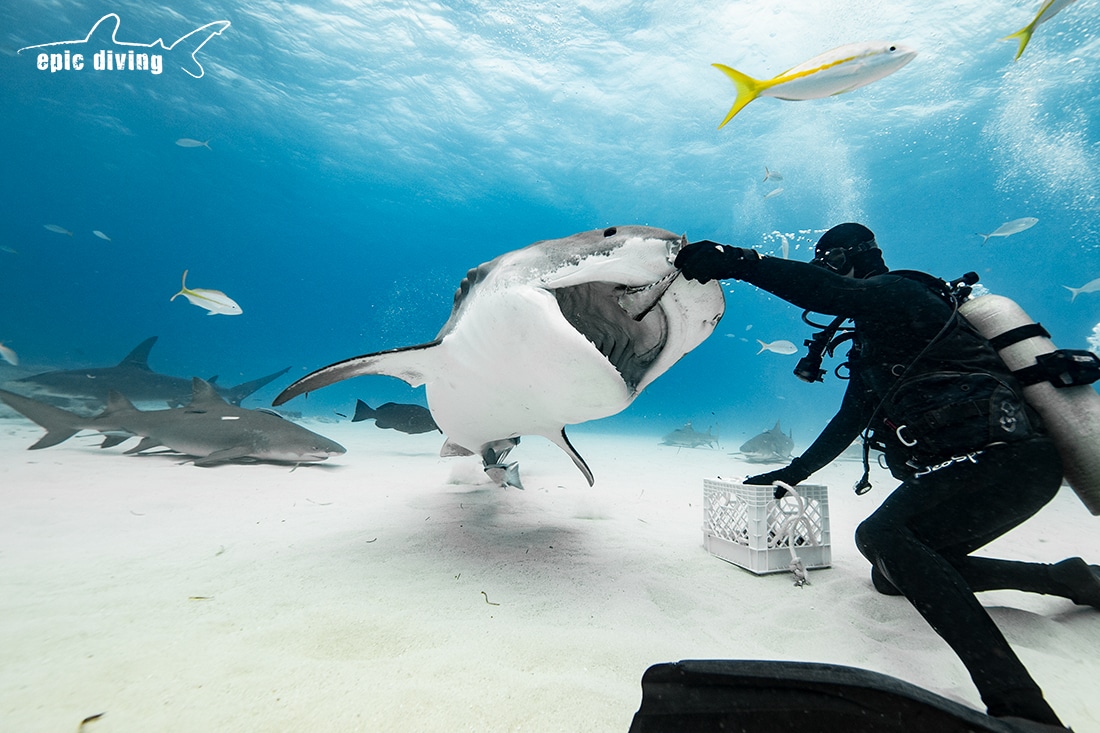
Does Chumming Make Sharks Aggressive?
Introduction: Separating Fact from Fear
For many people, the idea of throwing fish parts or “chum” into the ocean brings one thing to mind: a feeding frenzy straight out of a Hollywood movie. But does chumming really make sharks aggressive, or is that just another misconception about these powerful predators?
In this article, we’ll break down the myth vs. fact of chumming, explain what the science says, and show why responsible chumming is a valuable tool for research, conservation, and eco-tourism.
The Myth: Chumming Turns Sharks into Frenzied Predators
Popular culture has painted chumming as a reckless activity, luring sharks into a dangerous, frenzied state where they’re more likely to attack anything nearby. Movies and sensational headlines reinforce the idea that chum equals chaos.
This myth makes many people nervous about shark diving, assuming that divers are “taught to swim with sharks by baiting them into aggression.”
The Facts: What Science and Experience Show
1. Chumming Attracts, But Doesn’t Transform
Chum works like a scent trail in the ocean. It attracts sharks into an area, but it does not alter their natural behavior. A shark that is cautious remains cautious. A shark that is bold remains bold.
2. No Evidence of Increased Aggression
Scientific studies and decades of fieldwork show that chumming does not increase aggression or risk to divers. Sharks investigate the scent, but they do not lose control of their behavior.
3. Controlled and Responsible Practices
Professional shark operators, like those at Tiger Beach, use highly controlled methods. Chumming is done to create safe, predictable interactions, allowing divers to observe sharks without encouraging unnatural feeding frenzies.
Why Chumming is Important
- Conservation and Awareness: Shark tourism generates global awareness and funding for shark conservation efforts. Without chumming, many of these encounters wouldn’t be possible.
- Scientific Research: Chum is often used to attract sharks for tagging, population studies, and behavioral research.
- Safe Eco-Tourism: By attracting sharks to a specific site, operators can keep dives structured, supervised, and safe.
How Responsible Chumming Works at Tiger Beach
At Epic Diving, we use minimal chum, just enough to attract sharks into view without overfeeding or altering their natural foraging. Divers observe sharks in a calm, natural state, often swimming gracefully in clear water.
Sharks are not overfed. The focus is on respectful encounters that benefit both the divers and the animals.
Myth vs. Fact Recap
- ❌ Myth: Chumming makes sharks aggressive and dangerous.
- ✅ Fact: Chumming attracts sharks but does not make them aggressive. When done responsibly, it supports conservation, research, and safe shark diving.
Conclusion: Responsible Chumming Builds Respect
Chumming, when done with care and responsibility, is not about creating chaos, it’s about creating opportunity. For divers, researchers, and conservationists, it’s a vital tool to safely connect with these misunderstood predators.
At Tiger Beach, responsible chumming practices give divers the chance to witness the beauty and power of sharks in their natural element, not as Hollywood villains, but as keystone species worthy of respect and protection.
FAQ – Does Chumming Make Sharks Aggressive?
Chumming is the process of using fish parts or oils to create a scent trail in the water that attracts sharks.
No. Sharks investigate the scent, but professional operators avoid overfeeding or stimulating unnatural group feeding.
Yes, when done responsibly under the guidance of professionals, chumming allows for safe, predictable shark encounters.
No. Sharks at Tiger Beach continue to hunt naturally across their range, chum is a small supplement, not a food source.
It allows for close observation, research, and eco-tourism, which supports global shark protection efforts.