
Great Hammerhead Shark: Habitat, Behavior & Diving Encounters
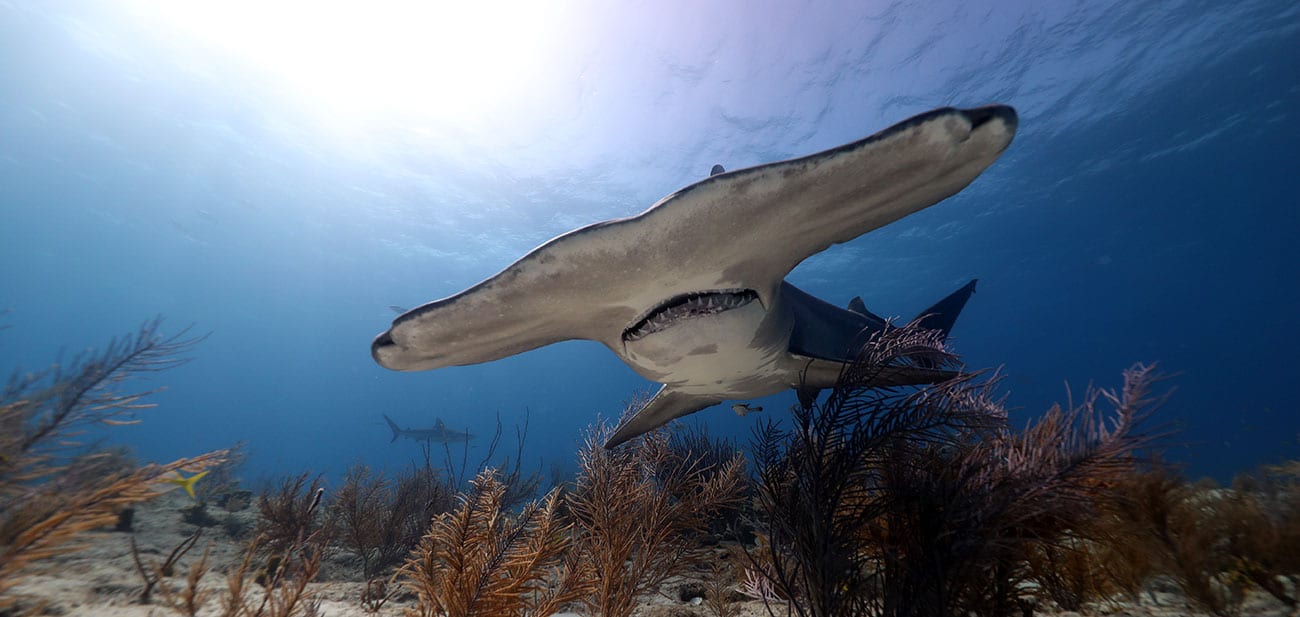
The Great Hammerhead Shark (Sphyrna mokarran) is the largest species of hammerhead shark, renowned for its distinctive, T-shaped head. This apex predator is a rare and awe-inspiring sight in the waters around Tiger Beach and the Bahamas. Despite its formidable appearance, the Great Hammerhead is typically shy and elusive, making encounters with it a prized experience for divers.

Physical Description
Habitat & Distribution
Great Hammerheads inhabit tropical and subtropical waters worldwide, typically between latitudes 40°N and 37°S. They are found in coastal and offshore areas, including continental shelves, island terraces, and lagoons. In the Bahamas, they are commonly observed around Tiger Beach, where they are attracted to the shallow, clear waters.
Behavior & Ecology
Great Hammerheads are solitary and migratory, often traveling long distances in search of food and suitable habitats. They primarily prey on rays, including stingrays and eagle rays, using their wide head to pin down and immobilize their prey. Despite their size and power, they are generally non-aggressive toward humans and are more likely to avoid encounters than initiate them.
Conservation Status
The Great Hammerhead is listed as Critically Endangered on the IUCN Red List of Threatened Species due to significant population declines caused by overfishing, habitat degradation, and the high value of their fins in the shark fin trade. Conservation efforts are ongoing to protect this species through international agreements and local regulations.
Diving with Great Hammerheads
Diving with Great Hammerheads is a rare and exhilarating experience. At Tiger Beach, divers can observe these majestic sharks as they glide gracefully through the water, often circling the dive site and interacting with the environment. Due to their shy nature, encounters are typically peaceful and awe-inspiring, offering unique opportunities for photography and observation.
🦈 IUCN Red List Status
For the most current conservation status and detailed information on the Great Hammerhead Shark, please refer to the official IUCN Red List entry:
👉 Great Hammerhead Shark – IUCN Red List
Frequently Asked Questions (FAQs)
No, Great Hammerheads are generally non-aggressive and avoid human interaction. Attacks are extremely rare and typically occur only if the shark feels threatened.
The Bahamas, particularly Tiger Beach, is renowned for its Great Hammerhead populations. Several dive operators, including Epic Diving, offer expeditions to this area.
Their diet primarily consists of rays, including stingrays and eagle rays. They use their wide head to pin down and immobilize their prey.
Great Hammerheads have an average lifespan of around 40 years.
The primary threats include overfishing, habitat loss due to coastal development, and the high demand for their fins in the shark fin trade.


