
Nurse Shark: Habitat, Behavior & Diving Encounters
The Nurse Shark (Ginglymostoma cirratum) is a bottom-dwelling species known for its docile nature and distinctive appearance. Commonly found in the warm, shallow waters of the Atlantic and Eastern Pacific Oceans, nurse sharks are a favorite among divers for their calm demeanor and ease of observation.
Physical Description
- Size: Typically reaches lengths of 7–10 feet (2.1–3 meters), with some individuals growing up to 14 feet (4.3 meters).
- Distinctive Features:
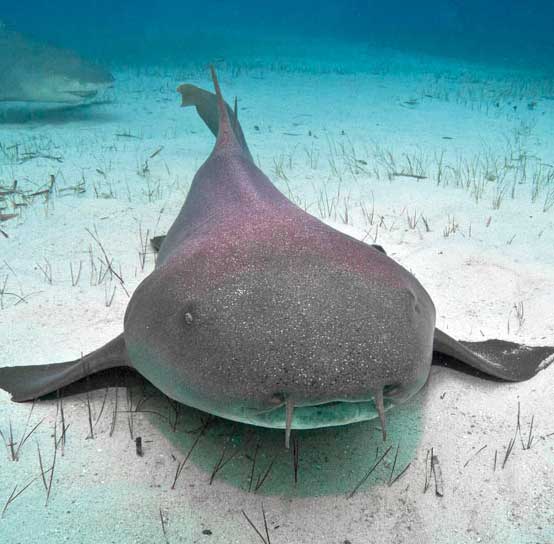
- Broad, flat head with a pronounced overbite.
- Small, forward-set mouth located well in front of the eyes.
- Two dorsal fins of similar size; first dorsal positioned just behind the pectoral fins.
- Long, slender body with a pointed snout.
- Light gray or gray-brown dorsal coloration with a white underside.
Habitat & Distribution
Nurse sharks inhabit tropical and subtropical coastal waters worldwide, typically between latitudes 40°N and 37°S. They are found in shallow, inshore areas such as coral reefs, seagrass beds, and mangrove channels. In the Bahamas, divers observe nurse sharks in many areas, including around Tiger Beach.
Behavior & Ecology
Nurse sharks are nocturnal and solitary predators, primarily feeding on crustaceans, mollusks, and small fish. They use their specialized jaws to create a powerful suction, allowing them to extract prey from crevices and under rocks. During the day, they often rest motionless on the seafloor, sometimes in groups, and become more active at night when hunting.
Conservation Status
The nurse shark is currently listed as “Least Concern” by the IUCN Red List. However, they are occasionally targeted by commercial and artisanal fisheries for their meat, skin, and liver oil. Conservation efforts focus on monitoring populations and protecting critical habitats to ensure their continued health.
Diving with Nurse Sharks
Diving with nurse sharks offers a unique opportunity to observe these gentle creatures in their natural habitat. At Tiger Beach, divers can encounter nurse sharks resting on the sandy bottom or gliding gracefully through the water. Their calm nature allows for close-up photography and a memorable diving experience.
🦈 IUCN Red List Status
For the most current conservation status and detailed information on the nurse shark, please refer to the official IUCN Red List entry:
Frequently Asked Questions (FAQs)
No, nurse sharks are generally non-aggressive and avoid human interaction. Attacks are extremely rare and typically occur only if the shark feels threatened.
The Bahamas has a healthy nurse shark population.
Their diet primarily consists of crustaceans, mollusks, and small fish. They use their specialized jaws to create a powerful suction, allowing them to extract prey from crevices and under rocks.
Nurse sharks have an average lifespan of around 25 years in the wild.
This shark species is not currently facing significant threats. However, nurse sharks are occasionally targeted by commercial and artisanal fisheries for their meat, skin, and liver oil in some areas.
Check out this nurse shark ID guide from The Shark Trust.


Pingback: Featured Species: Nurse Shark (Ginglymostoma cirratum) – An Ocean For Sharks